Introduction
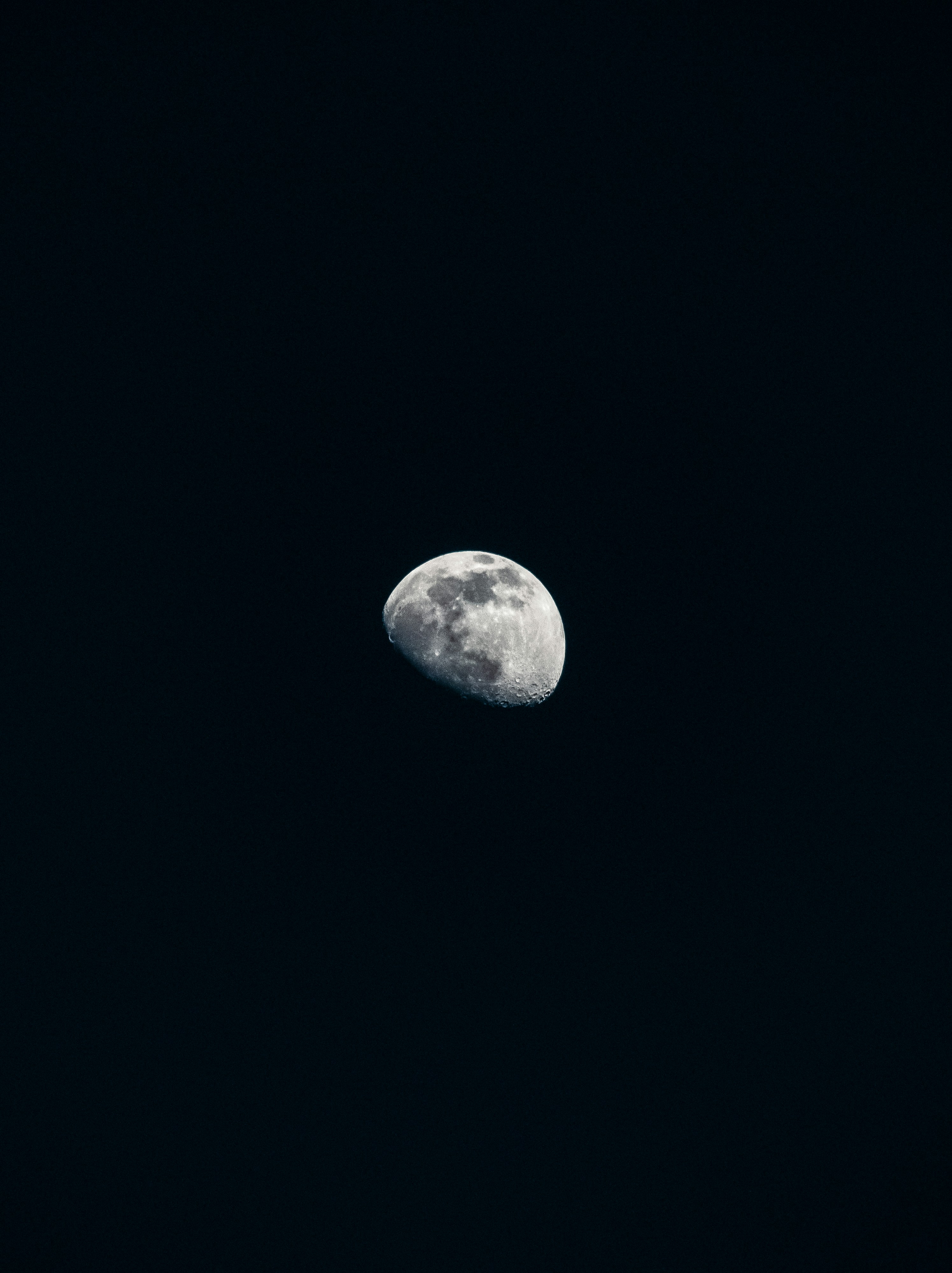
The moon has enthralled humanity for centuries, serving not only as a celestial companion but also playing a crucial role in our planet’s stability and the rhythms of life on Earth. Imagine a scenario where this lunar presence vanishes overnight. Such an unprecedented event would send shockwaves through both our natural world and our daily lives. The disappearance of the moon would impact tidal patterns, the length of days, and even the climate itself.
To comprehend the significance of the moon in our universe, we must consider its gravitational influence. The moon’s gravity is responsible for the ocean tides, which in turn affect marine life and coastal ecosystems. Without the moon, tides would become significantly weaker, leading to alterations in the behavior of various species that rely on these cycles for feeding and breeding. The immediate consequences would thus be stark, possibly resulting in the decline of certain marine habitats.
Moreover, the moon plays a role in stabilizing Earth’s axial tilt, which influences climate patterns over the long term. A sudden absence of this stabilizing force could lead to drastic changes in seasons, potentially creating more extreme weather conditions. Additionally, the cultural and psychological impact of losing the moon cannot be underestimated. It has been a source of inspiration for art, mythology, and literature across civilizations. What effects would this void have on human society as we know it?
These questions pave the way for a thorough exploration of the various implications that would arise from such a cosmic anomaly. By examining the immediate and long-term effects, we can gain insights into the moon’s vital role and the delicate balance that governs our existence.
Immediate Effects of the Moon’s Disappearance
In the event of the moon’s sudden disappearance, the immediate reaction would be one of bewilderment and shock for inhabitants of Earth. As the moon vanishes from the night sky, individuals would initially experience a brief moment of confusion. Many would be accustomed to the moon’s presence, utilizing its light to navigate at night or to engage with the natural environment. The last glimpses of lunar brilliance would cast a haunting glow before sinking into complete darkness.
The absence of the moon would not produce an instant catastrophic impact on Earth’s surface. For the first few moments, life would continue largely unchanged. The gravitational influence that the moon exerts on Earth, which causes ocean tides, would not be felt immediately. While the tides would ultimately be affected, there would be a delay before the repercussions of this disappearing act would unfold.
As the moonlight dissipates, people might initially be unaware of the full scope of the event. Many might take a moment to adjust their eyesight, grasping the reality that the familiar night celestial body is no longer present. Some might speculate about the potential causes, with thoughts ranging from scientific explanations to more fantastical theories. The sudden darkness would be a moment of collective realization, shared by anyone observing the night sky.
In summary, the disappearance of the moon would evoke immediate confusion and a surreal sense of loss among Earth’s inhabitants. While there would likely be no immediate disruptions to daily life or environmental conditions, the sudden void left in the cosmos would create a remarkable shift in the human psyche, shifting attention from the natural order that is typically so relied upon.
Changes to Earth’s Oceans and Tides
The Moon plays a crucial role in maintaining the delicate balance of Earth’s tidal systems through its gravitational pull. This celestial body exerts a significant influence on the oceans, leading to the rhythmic rise and fall of sea levels that characterize tides. The gravitational force of the Moon pulls water towards it, creating a bulge known as the tidal force, which gives rise to high tides. Conversely, the areas perpendicular to the Moon experience low tides. This predictable pattern is integral to coastal ecosystems and marine life, as it affects feeding habits, breeding cycles, and overall habitat structure.
If the Moon were to suddenly disappear, the immediate consequence would be a substantial alteration in tidal patterns. Without the Moon’s gravitational influence, tides on Earth would be primarily driven by the Sun, which, while still effective, would produce tides that are substantially weaker—about one-third the strength of current tides. This reduction in tidal amplitude would lead to diminished water movement along coastlines, affecting nutrient distribution and sediment transport vital for maintaining healthy marine ecosystems.
Moreover, the absence of the Moon could disrupt the natural behaviors of various marine species that depend on tidal rhythms for spawning and feeding activities. Many fish and invertebrates have adapted their life cycles to the predictable patterns created by lunar phases. For instance, certain fish species spawn during full or new moons, taking advantage of higher tides. The disruption of these synchronized activities could lead to declines in populations, thereby impacting the food web and coastal resources that many communities rely upon for sustenance.
Stability of Earth’s Axial Tilt
The Moon plays a pivotal role in stabilizing Earth’s axial tilt, which is crucial for maintaining the planet’s climate and seasonal patterns. Earth’s axis is tilted at an angle of approximately 23.5 degrees, which is responsible for the variation in sunlight that different parts of the planet receive throughout the year. This tilt influences the seasonal cycles, creating the characteristic climate zones that we experience today.
Without the Moon, Earth’s axial tilt would become significantly less stable over geological timescales. Instead of the relatively fixed angle maintained by the gravitational influence of the Moon, Earth’s tilt could oscillate chaotically, potentially varying between 0 to 85 degrees. Such drastic changes would lead to significant consequences for the Earth’s climate systems. For instance, a more pronounced axial tilt could result in extreme seasonal variations, with heightened summers and harsher winters.
Moreover, these oscillations in axial tilt could create unpredictable climate shifts, disrupting established ecosystems and habitats. Regions that currently benefit from relatively stable climates could undergo transitions to much harsher conditions, leading to possible biodiversity loss and shifts in agricultural viability. The lack of a stabilizing force, like the Moon, would also likely exacerbate phenomena such as ice ages or interglacial periods, further complicating the climatic conditions experienced by life on Earth.
Consequently, the Moon’s presence is vital not only for the stability of Earth’s axial tilt but also for the maintenance of a conducive environment for life. The gradual changes that currently occur over millennia could transform into abrupt and unpredictable climate events, posing challenges for both natural ecosystems and human societies alike.
Impact on Wildlife and Ecosystems
The lunar cycle plays a significant role in the ecological dynamics of various species on Earth. Many marine creatures, such as sea turtles, rely on the moon’s gravitational pull and the light it reflects to navigate during critical life stages. For instance, female sea turtles often use lunar light to guide them back to the beaches where they were born to lay their eggs. With the abrupt disappearance of the moon, these turtles would face significant disorientation, potentially leading to devastating declines in their populations.
Furthermore, coral reefs, which have intricate spawning events synchronized with lunar phases, would be adversely affected. These fascinating ecosystems depend on the moon to announce the opportune time for coral to release sperm and eggs into the water. The absence of the moon could hinder this reproductive process, thus diminishing coral diversity and vitality, leading to broader repercussions within marine biodiversity.
Moving beyond marine life, many migratory birds rely on lunar cycles for navigation during their seasonal migrations. Birds use the moon as a celestial guide to orient themselves over vast distances. If the moon were to vanish, these navigational challenges would likely result in increased misdirection, leading to potential declines in bird populations due to increased mortality rates from exhaustion or predation.
The cascading effects of losing the moon go further, striking at the very foundation of ecological balances and food chains. Disruptions in breeding cycles for various species could lead to mismatches between predators and prey, threatening the survival of entire ecosystems. Changes in animal behaviors, reproductive timings, and foraging patterns could create a ripple effect challenging the stability of wildlife populations across various habitats.
The Historical Importance of the Moon in Human Culture
The Moon has played a crucial role in shaping human civilization through millennia, providing a celestial anchor that has influenced our understanding of time, agriculture, mythology, and cultural narratives. From the earliest civilizations, people have observed the Moon’s phases and cycles, integrating them into their timekeeping practices. Ancient societies, such as the Sumerians and Maya, meticulously tracked lunar patterns, establishing calendars that guided agricultural activities and religious ceremonies. The new moon and full moon, especially, marked significant periods for planting and harvesting, thus facilitating the sustenance of early communities.
In various cultures, the Moon has held a profound symbolic presence that manifested in myths and folklore. For example, in Greek mythology, Selene was the goddess of the Moon, representing femininity and the rhythms of nature. Many cultures have woven stories around the Moon, often linking its phases to human emotions, growth cycles, and even the tides of the oceans, showcasing the intrinsic connection between celestial bodies and terrestrial life. This cultural tapestry has been rich with meanings, making the Moon a constant reference point in literature, art, and religion.
The agricultural reliance on lunar cycles remains profound, showcasing how deeply embedded the Moon is in our rituals and traditions. Farmers still plant and harvest according to lunar calendars, reflecting an understanding shared by generations. The disappearance of the Moon would not only eliminate this natural guide but could also disrupt the rhythms that have governed agricultural cycles for centuries. Without the Moon, societies would need to reassess their cultural practices, farming techniques, and even mythologies, potentially leading to a disconnection from the natural world that has shaped human existence. Thus, the Moon’s absence would mark a significant shift in the cultural and historical narrative of humanity.
The End of Solar Eclipses
Solar eclipses are remarkable astronomical events that occur when the Moon passes between the Earth and the Sun, consequently obscuring the Sun partially or completely for a brief period. This phenomenon occurs due to the relative sizes and distances of the Earth, Moon, and Sun, which allows for the Moon’s shadow to cast upon the Earth’s surface. As a result, solar eclipses have been the subject of fascination for centuries, igniting curiosity and awe among observers while holding significant cultural and scientific relevance.
If the Moon were to suddenly disappear, the occurrence of solar eclipses would cease entirely. The absence of the Moon would remove the essential component required for this intricate celestial alignment, leading to a fundamental change in our astronomical landscape. Solar eclipses have historically provided scientists with unique opportunities to study the Sun’s corona, the outermost atmosphere of the Sun, which is visible only during these rare events. Such observations have been instrumental in advancing our understanding of solar physics and the behaviors of cosmic entities.
The removal of solar eclipses would not only hinder scientific research but also eliminate a deep cultural heritage. Many civilizations have revered eclipses as mystical events, attributing various meanings to them. They have often been viewed as omens or messages from deities, and have inspired myths, rituals, and celebrations across various cultures around the world. The loss of solar eclipses would represent a diminishment of collective experience and shared wonder, as societies would no longer have the opportunity to witness and interpret this extraordinary celestial dance.
In conclusion, the disappearance of the Moon would mark the end of not only solar eclipses but also the accompanying scientific inquiry and cultural significance tied to these celestial events. The loss would resonate through both the realms of scientific discovery and human societal expression, illustrating the Moon’s integral role in shaping our relationship with the cosmos.
Earth’s Orbit and Future Survival
The Moon plays a significant role in the intricacies of Earth’s environment, especially concerning tides and the stability of its axial tilt. However, if the Moon were to suddenly disappear, the fundamental dynamics of Earth’s orbit around the Sun would remain largely undisturbed. The Earth’s journey around the Sun is governed primarily by the gravitational pull of the Sun, which vastly outweighs any influence the Moon may exert.
While the absence of the Moon would indeed have profound effects on specific natural phenomena, the overall pathway of the Earth through space would not alter significantly. The Earth would continue to traverse its elliptical orbit, completing a revolution around the Sun every 365.25 days, as dictated by gravitational forces and the conservation of angular momentum. This stability in orbit ensures that seasons and the cycles of day and night will persist unimpeded.
The vanishing of the Moon would entail changes—such as altered tides, which would be less pronounced, and potential shifts in the climate over long periods due to variations in axial tilt stability. Nevertheless, life on Earth would adapt to these changes over time. Flora and fauna would adjust their behaviors and physiological responses in reaction to the new environmental conditions, showcasing the resilience of life.
In the absence of the Moon, the ecological balance may reshape, yet Earth’s ecosystems would not collapse. The variety of habitats would still support life, and humans, alongside countless other species, would persist, albeit in altered forms. Overall, while the Moon’s disappearance would leave a mark on Earth’s natural rhythms, the planet and its inhabitants would continue their existence, adjusting to the new reality of life without Earth’s natural satellite.
Conclusion
The hypothetical disappearance of the Moon presents profound implications that extend far beyond mere visual absence. This celestial body plays an integral role in the maintenance of Earth’s natural systems. The Moon is fundamental to the stability of our planet’s axial tilt, which directly influences seasonal variations. Without it, Earth could experience erratic climate patterns, severely impacting agriculture, ecosystems, and ultimately, human life.
Moreover, the gravitational pull of the Moon is responsible for creating tides in our oceans. The absence of these tides would result in significant changes to marine ecosystems, disrupting the delicate balance necessary for diverse aquatic life forms. Many species rely on tidal rhythms for reproduction, feeding, and navigation, and without these cues, entire populations could face drastic declines, potentially leading to extinction.
In addition to its physical contributions, the Moon has played a cultural and psychological role throughout human history. It influences tides not just in the sea but also in folklore, art, and literature, acting as a source of inspiration and fascination. The Moon’s phases, tied to various cultural practices and calendars, demonstrate its broader significance in the human experience.
In assessing the implications of such a cosmic event, it becomes clear that the Moon is more than just a celestial object; it is intertwined with Earth’s geological, biological, and cultural life. The loss of the Moon would not only disrupt scientific understanding but would also strip humanity of a fundamental aspect of its heritage and identity. Thus, the importance of the Moon in maintaining the delicate balance of life on Earth cannot be overstated.